


🎧 Madhouse – A Complete Chronicle
- GlamSlamEscape

- Mar 12
- 3 min read
Updated: Apr 16
Prince’s Jazz‑Funk Laboratory (1985–1995)
Introduction
Madhouse stands as one of the most inventive and misunderstood chapters in Prince’s creative universe — a fictional jazz‑funk ensemble built around real musicians, imaginary personas, and a bold experiment in instrumental storytelling. Conceived in Minneapolis between 1985 and 1987, Madhouse allowed Prince to explore jazz, improvisation, noir aesthetics, and conceptual art without the expectations attached to his name.
At its core, Madhouse was a collaboration between Prince and Eric Leeds, but its mythology, imagery, and sound world made it feel like something entirely separate — a secret door into Prince’s restless musical imagination.
⭐ Origins: From The Family to The Flesh
Prince’s fascination with instrumental jazz‑funk began during sessions for The Family in 1985. Working with Eric Leeds unlocked a new musical chemistry, and Prince soon recorded hours of instrumental material with:
Eric Leeds
Sheila E. and members of her band
musicians connected to Wendy & Lisa’s families
These sessions produced a shelved project called The Flesh — a raw, improvisational, jazz‑funk experiment. Prince even compiled a full album under that name, intended to be released by a pseudo‑band. When the project was abandoned, its DNA evolved into something more stylized and conceptual: Madhouse.
⭐ The Fictional Band: A Jazz Group That Never Existed
To distance the project from his main persona, Prince created an entirely fictional band lineup, complete with invented biographies:
Eric Leeds – saxophone (the only real member)
John Lewis – drums (fictional)
Bill Lewis – bass (fictional)
Austra Chanel – keyboards (fictional)
The Japanese LP release of 8 even included a detailed backstory claiming the group formed in Atlanta after the Revolution’s 1986 Japan tour. The obi strip teased rumours that “Austra Chanel” was actually Prince — a playful nod to the truth.
In reality, Prince and Eric Leeds were the only musicians on the first album.
This blending of fact and fiction was part of the art. Madhouse wasn’t just music — it was world‑building.


⭐ The Albums: 8 and 16 (1987)
8 (January 19, 1987 )
The debut album introduced the Madhouse aesthetic:


16 ( November 18, 1987)
The second album expanded the palette:
contributions from Sheila E. (drums), Levi Seacer Jr. (bass), and Dr. Fink (keyboards)
1940s gangster‑themed videos
the subtitle “new directions in garage music,” nodding to Miles Davis
Despite the expanded credits, Prince again played most instruments, with Leeds providing the melodic voice.
⭐ Hard Life (1987) – The Lost Madhouse Film
Prince and Eric Leeds filmed a short unreleased movie titled Hard Life, featuring Madhouse in a stylized noir setting. It has never been officially released, adding to the project’s mystique.
⭐ The Unreleased Albums: 24 (1988) and 24 (1993)
24 (1988) – The Electronic Album
Recorded mostly by Prince and Leeds:
heavy drum programming
extensive sampling
more keyboards and electronic textures
“The Dopamine Rush Suite” (tracks 21–24) included vocals
Warner Bros. rejected the album. Only fragments surfaced on Eric Leeds’ Times Squared.
24 (1993) – The Full Band Version
A new incarnation of Madhouse recorded another album titled 24 with:
Prince – keyboards
Eric Leeds – saxophone
Michael B. – drums
Sonny T. – bass
Levi Seacer Jr. – guitar
Two tracks were officially released:


17 (Penetration) on 1-800-NEW-FUNK


Asswoop via Prince’s website
⭐ Live Performances (1987)
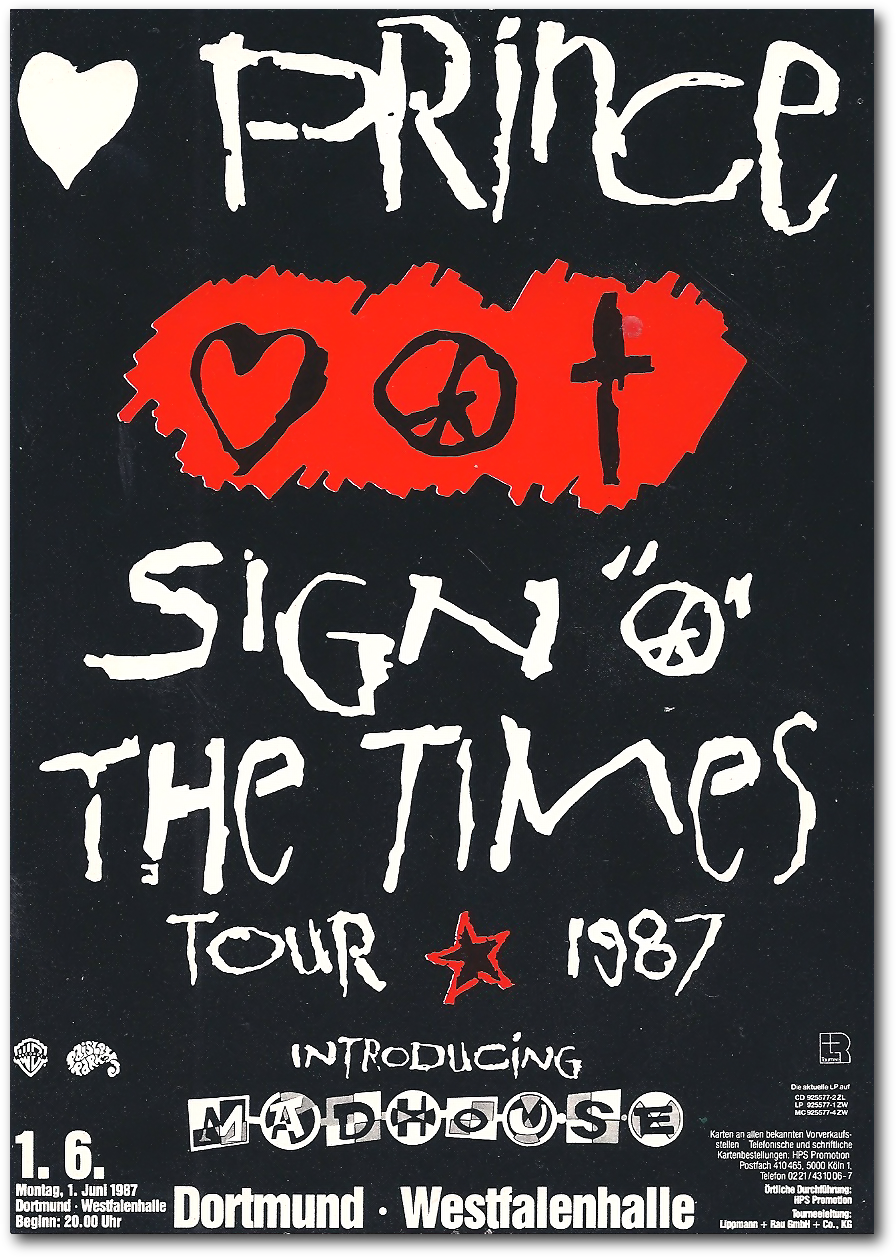
Sign O’ The Times Tour Support Act
A real touring version of Madhouse was assembled for the Sign O’ The Times tour:
Eric Leeds – baritone sax
Dr. Fink – keyboards
Levi Seacer Jr. – bass
Dale Alexander – drums
Jazz keyboardist Bill Carrothers rehearsed early on but was replaced by Fink.
The band performed in monk’s robes, playing a 20‑minute set including:
Mutiny
Two
Three
Six
occasional performances of One, Nine, Sixteen
Models held up numbered signs to announce each track — a surreal, theatrical touch typical of Prince’s 1980s creativity.
One‑Off Club Shows
Madhouse also performed standalone shows in:
Berlin (Quasimodo)
Paris (New Morning)
Munich (Park Café)

⭐ Why Madhouse Matters
Madhouse represents:
Prince’s pure musicianship
his love of jazz and improvisation
his fascination with alter‑egos and fictional worlds
his willingness to experiment outside the pop spotlight
a precursor to later instrumental and jazz‑leaning work
For many fans, Madhouse is a hidden treasure — a glimpse of Prince without the persona, without the vocals, without the expectations. Just music.
⭐ Legacy
Though short‑lived, Madhouse remains one of Prince’s most daring side projects. Its influence can be heard in:
The Rainbow Children
Xpectation
N.E.W.S.
Eric Leeds’ solo work
the broader Minneapolis jazz‑funk scene
It stands as a testament to Prince’s refusal to be boxed in — a reminder that behind the hits was a musician constantly searching, experimenting, and reinventing.


Comments