
Acceptance At Last Review: 1970
- T.Rex

- Dec 12, 1970
- 3 min read
Updated: Dec 12, 2025
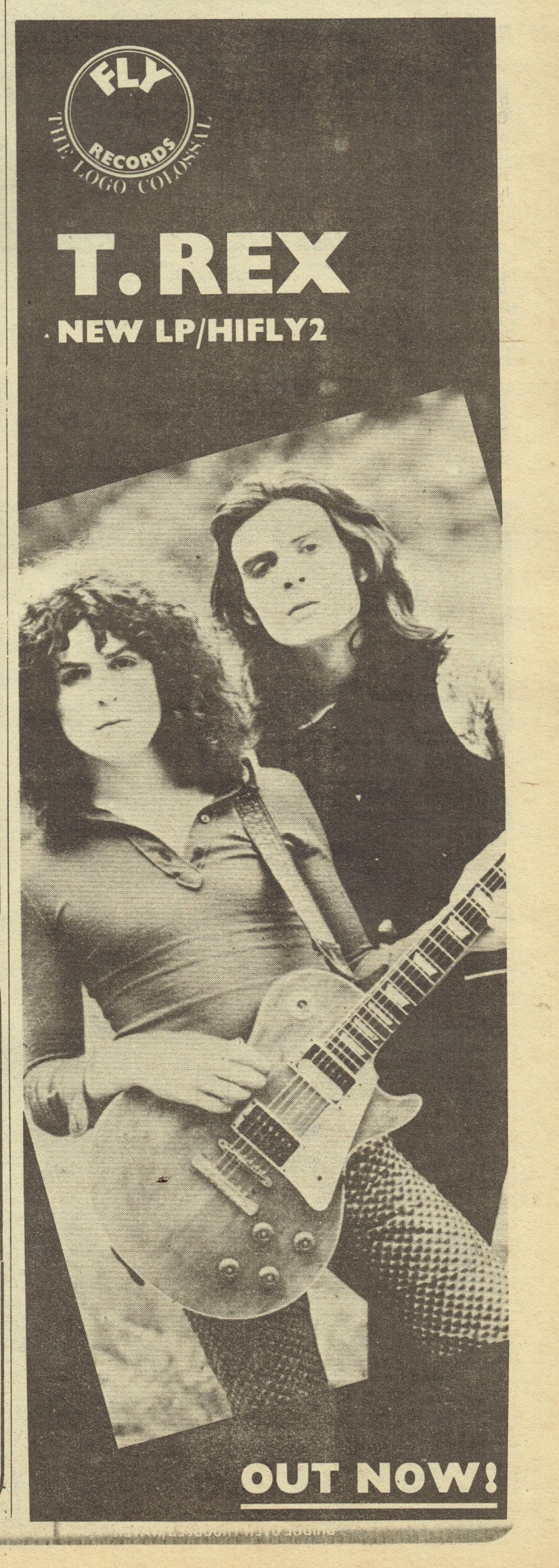
A NME HiFly 2 T. Rex Triumph
Published in the UK on December 12, 1970, New Musical Express’s album review “Acceptance at Last for T. Rex” celebrated T. Rex’s T. Rex (HiFly 2) — their first album as a duo after dropping “Tyrannosaurus” and adding Mickey Finn. The review hailed Marc Bolan’s shift from underground folk to electric glam, calling it “the acceptance he’s been waiting for.” A landmark NME moment for the birth of T. Rex.
Review Overview
Publication Details
Magazine: New Musical Express (UK).
Date: December 12, 1970.
Format: One-page album review.
ACCEPTANCE AT LAST FOR T. REX
review by Nick Logan
T. REX (Fly stereo HIFLY 2 42s 6d)
I DON'T know how much it is down to the Great British Public moving to meet Marc Bolan, or Marc Bolan moving to meet the Great British Public, but one thing "Ride A White Swan" and the new T. Rex album prove is that they have definitely met. T. Rex the group, it should be said, is now a commercial proposition; "T. Rex" the album the finest work the duo has presented to date.
With our Marc pulling no punches on electric guitar and pulling out surprises in the arranging department, it's an immensely enjoyable album that sits firmly on the road the duo have pursued since those past, unwanted days.
Electricity has had a dual effect of strengthening the rhythmic and melodic qualities of Bolan's com-positions and after five albums it must be a source of satisfaction to him to be able to pull out such good songs.
colour Then again, his guitar playing, delicate little riffs, edgy bursts and descriptive fragments, around the melodies perfectly in a style that owes little to anyone other than Marc Bolan.
On Jewel, against Micky Finn's pounding drums, there's even a dash of feedback stirring down there in the clearing. This is one of many strong tracks which could have made singles.
The orchestrations are part of the surprises and while I was in two minds as to their effectiveness in Diamond Meadows, the use of strings to sweeten the really dirty riff in Beltane Walk works splendidly. The latter track is an album standout. Its riff borrowed from Jimmy McCracklin's The Walk, I kept getting bizarre visions of Bugs Bunny doing a camp gangster routine to its absurd swing.
The Summertime Blues T. Rex get a look in too. Is it Love, Marc doing his Eddie Cochran count in, and One Inch Rock, one of the best of the duo's earlier singles and redone here to take into account their musical changes, are pure rock and roll. The last almost has a sha-la-la chorus, except that it's more shoo-ti-too-ti-t-i-to.
All-acoustic numbers are now part of the group's past, but the load is lighter in The Visit and Suneye, both good melodies, while pixiephone, producer Tony Viscon-ti's recorder and wah wah pedal get in on the act in Root Of Star and The Time Of Love Is Now. So do Mothers Of Invention vocalists Howard Kaylan and Mark Voorman in Seagull Woman.
Apart from the two fragments of The Children Of Rarn, which Marc intends to develop on a future album, the set closes with The Wizard, the song which was Marc's first single as a solo performer back in 1965. The album version is a longish one that breaks out midway through into eight minutes of sniffle beat, toe-bopping improvisation.
Performed as an acoustic high-light of their act for the past two years it has now been dropped, and was included on the album as a kind of curtain closer to that part of T. Rex's development. Marc's own comment is that playing it acoustically would no longer be satisfying. "I would want bass on it now."
Of the album as a whole, he comments: "In the same way as 'White Swan' was the most direct single, so this is the most direct album. It communicates. I can feel incredibly satisfied and detached from it.
Do you have this NME review in your archive? Did T. Rex ride the white swan into your heart? Share in the comments!



Comments